Article 50 is live. Does your marking survive delivery?
EU AI Act transparency rules apply since 2 August 2026. Marking at generation is the easy half; here is how to prove the file users receive still carries it.
Von c2pa.design · Aktualisiert 2026-09-09 · 9 Min. Lesezeit
Source status: legislation, the Commission's final Guidelines (20 July 2026) and the Code of Practice on Transparency of AI-Generated Content. Linked at the foot of the page.
Since 2 August 2026, providers of generative AI systems in the EU must mark their output so that a machine can tell it was generated. Most teams did that half in an afternoon: turn on Content Credentials in the generator, confirm the manifest is there, close the ticket.
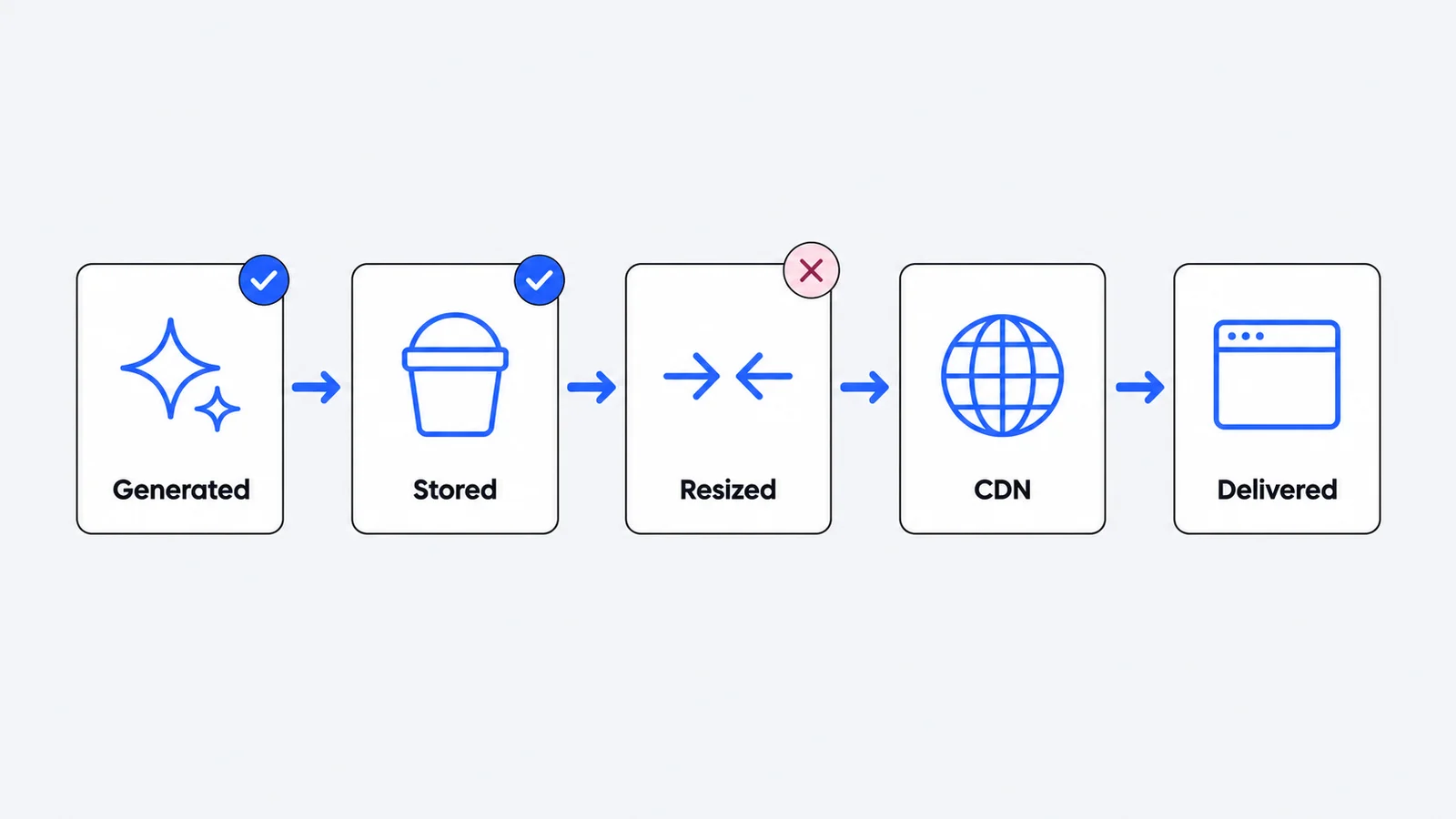
Then the image goes through a thumbnailer, a CDN and a social export, and arrives in front of the user with nothing attached. We check a lot of production URLs. The pattern is the same almost every time: marked at generation, gone at delivery, and nobody noticed because nothing was checking.
What Article 50 asks
| Provision | Who | Obligation |
|---|---|---|
| 50(1) | Providers | People must be told they are interacting with an AI system, unless it is obvious. |
| 50(2) | Providers | Synthetic image, audio, video and text must be marked in a machine-readable format and be detectable as artificially generated or manipulated. The marking must be effective, interoperable, robust and reliable "as far as technically feasible". |
| 50(4) | Deployers | Deep fakes, and AI-generated text published on matters of public interest, must carry a visible label at the point of first exposure. Narrow exceptions for editorial oversight, satire and law enforcement. |
A provider builds or places the AI system on the market. A deployer uses one under their own authority in a professional capacity, which is most companies reading this.
Fines run to €15 million or 3% of worldwide annual turnover, whichever is higher (Article 99).
The dates that matter
| Date | What happens |
|---|---|
| 1 August 2024 | The AI Act enters into force. |
| 20 July 2026 | Final Guidelines on Article 50 published; the Code of Practice is confirmed as an adequate way to demonstrate compliance. |
| 2 August 2026 | Article 50 applies. Systems placed on the market after this date must mark from day one. |
| 2 December 2026 | Grace period ends for generative systems already on the market before August, for the 50(2) marking obligation specifically (AI Omnibus). |
| 2 February 2027 | Code signatories must have watermark-detection interoperability in place. |
Content generated before 2 August 2026 does not need retroactive marking.
What "machine-readable" means in practice
The Act does not name a technology. The Code of Practice does, in effect: it asks providers for two layers, because "the current state of the art does not allow any single technique to satisfy all four requirements simultaneously".
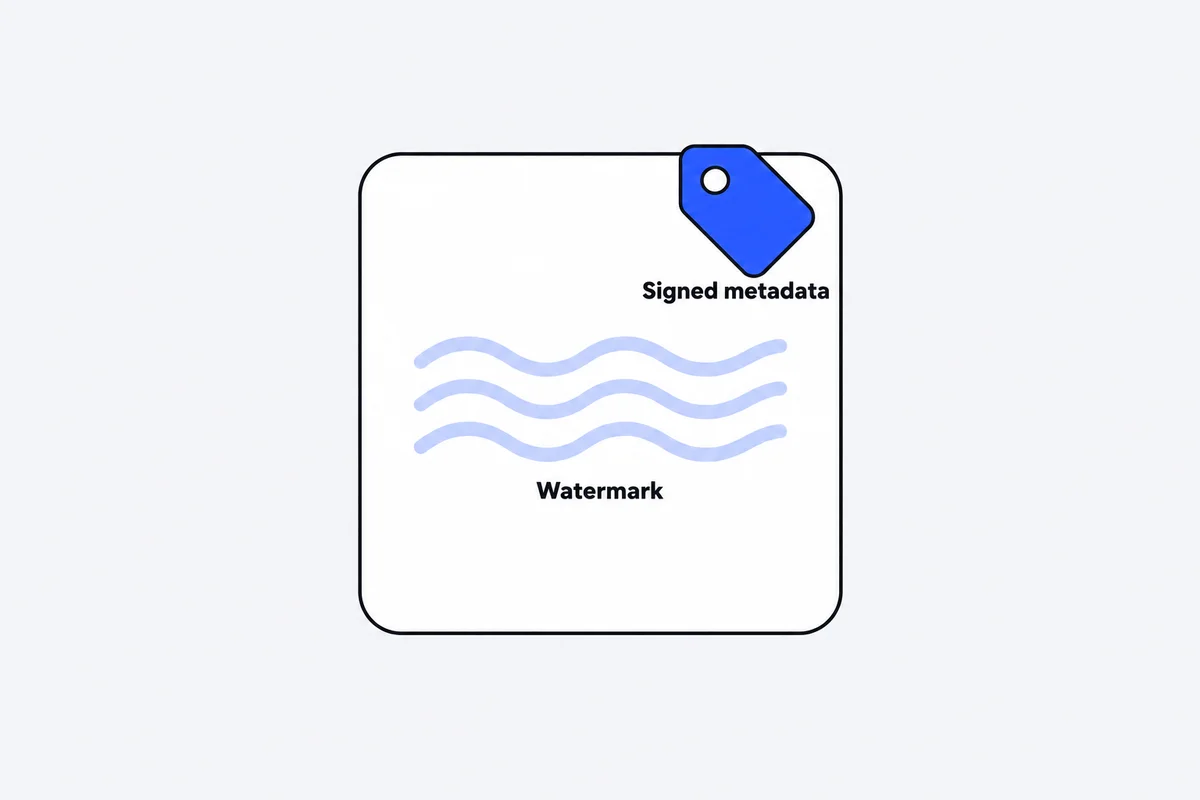
- Digitally signed metadata. In the field this is a C2PA manifest with
digitalSourceType: trainedAlgorithmicMedia, signed by a certificate on the C2PA Trust List. It is precise, verifiable by anyone, and it breaks the moment the bytes change. - An imperceptible watermark. SynthID and its relatives. It survives resizing and re-encoding better, and it can only be read by whoever holds the detector.
OpenAI, Google and Anthropic all ship the first layer on image output today; the two largest also ship the second. If you are a provider, you are expected to do both. If you are a deployer, layer one is the only signal you can verify yourself. This article is about keeping that signal alive.
The problem: the mark exists at generation and is gone at delivery
A C2PA manifest is a signed description of a specific set of bytes. Anything that re-encodes the image produces new bytes. From that point one of two things happens: the manifest is dropped, or it is carried forward and now reads as tampered, which is worse than absent.
Where it happens in a typical stack:
| Stage | What it does to the mark |
|---|---|
| Export dialog | "Strip metadata" is on by default in many tools because it makes files smaller. |
| Image optimiser at build time | Re-encodes every asset; nearly all drop the metadata block. |
| Thumbnail / resize service | New bytes, no re-signing. Manifest dropped or invalid. |
| CDN transformation | Some have a preserve setting. Some run a second optimiser that ignores it (Cloudflare Polish is the usual surprise). |
| Social and messaging platforms | Every major platform we test strips on upload. |
| Screenshots | Nothing survives. This is what the second layer is for. |
The regulatory shape of this is awkward. Your provider did its job. Your CDN undid it. The file in front of the user carries no evidence either way, and under C2PA a missing manifest proves nothing, so nobody downstream can even tell there was a mark to lose.
For a provider, "as far as technically feasible" is a reasonable standard, but a mark stripped by your own resizer is feasible to fix. The obligation follows the output to the last hop you control.
For a deployer, the 50(4) label needs a trigger. The manifest is the only cheap, verifiable trigger you have, and it is frequently gone by the time the file hits your upload handler.
For both, when someone asks for evidence, "we switched it on in August" is not a record.
What does not fix it
A detector as the plan. A classifier that guesses whether pixels look generated produces a score, not a record. It has a false-positive rate you cannot explain to a regulator and a false-negative rate you cannot explain to a user. Use one downstream of provenance if you must; do not build your transparency control on top of it. We do not ship one, and nothing on this site outputs a verdict on whether an image is genuine.
A line in the footer. "Some images on this page are AI-generated" is not machine-readable and it does not label the deep fake at the point of first exposure.
Turning on "preserve credentials" and moving on. The setting is real. So is the second optimiser on the same zone that ignores it. Without checking the delivered bytes you have changed a checkbox, not an outcome.
What works: check, find, fix, keep checking
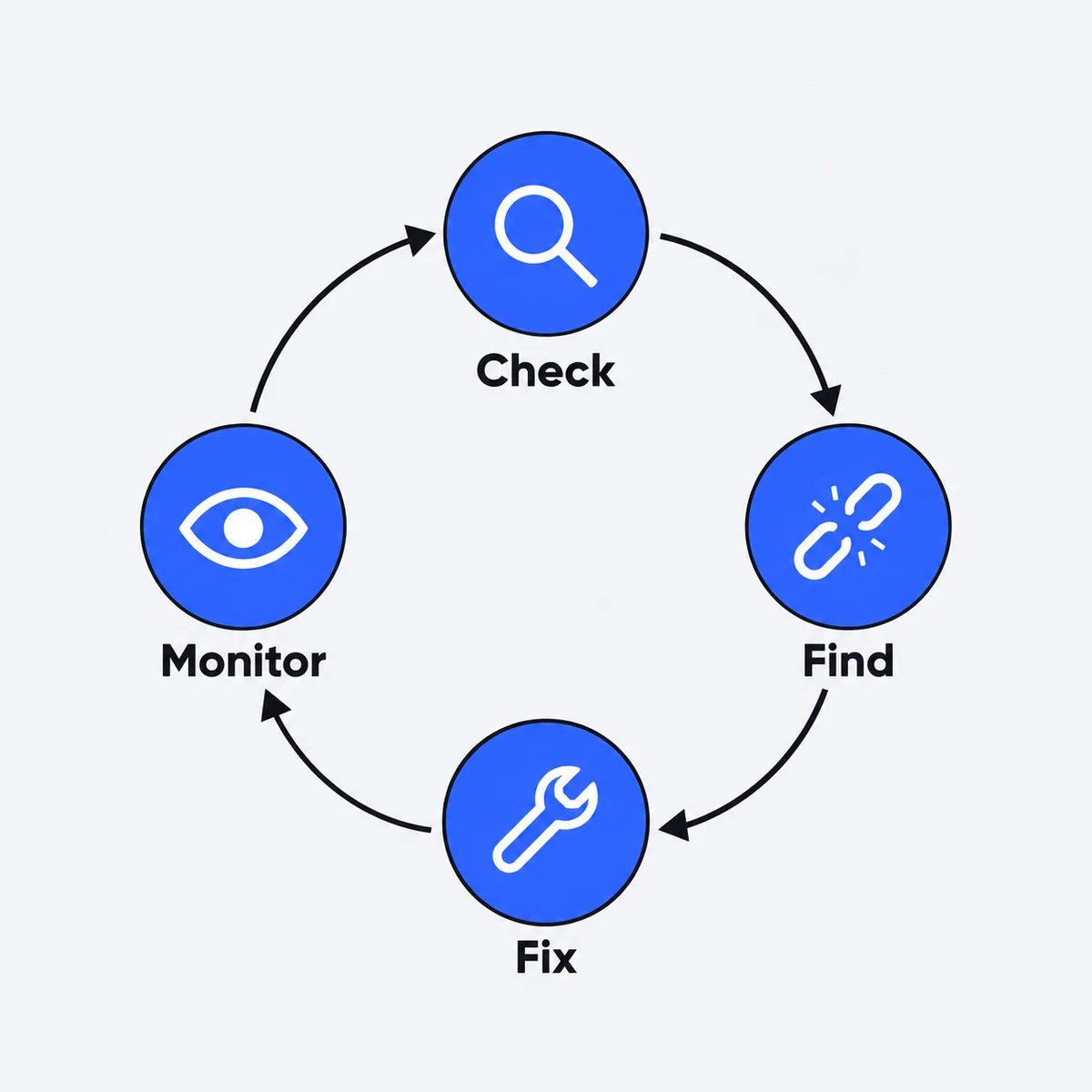
1. Check what users actually receive
Not the file in the bucket. The URL on the page. Paste one into the URL checker and it fetches the asset the way a browser does:
HTTP                200 OK
Content-Type        image/jpeg
C2PA                Absent
Origin (same asset) Present · Valid · Trusted
Credentials preserved   No
From a terminal, the open-source CLI does the same for a local file or a URL:
c2pa-check https://cdn.example.com/hero.jpg
Content Credentials ABSENT
Run it against ten production URLs. If all ten come back present and valid, you can stop reading. In our experience fewer than one team in ten can.
2. Find the hop
When delivery fails, walk the pipeline. Give the same asset at each stage and the picture is immediate:
Asset: campaign-92831.jpg

Generator          ✓ present · trusted
Object storage     ✓ present · trusted
Resize service     ✗ missing
CDN                ✗ missing
Public page        ✗ missing
This is the whole of a pipeline audit: one asset, every checkpoint, one finding. Teams do it by hand with the CLI, or let monitoring repeat it on every checkpoint on a schedule.
3. Fix it
The fixes are boring, which is the good news.
| Hop | Fix |
|---|---|
| Export / build optimiser | Turn off metadata stripping for signed assets, or exclude them from the optimiser. |
| Resize / transform | Re-sign the derived variant after the transform, with the original as an ingredient. Preservation alone leaves you with a manifest for bytes you no longer serve. |
| CDN | Enable preservation and disable the second optimiser on the same zone. Confirm from response headers, not the dashboard. |
| Any edit after generation | Re-sign after the last edit. A tampered manifest is a worse artefact than none. |
| Platforms you do not control | Keep the disclosure record on your side. You cannot rely on the file to carry it through an upload. |
4. Keep it that way
The pipeline that passes today gets a new optimiser next quarter. The control has to be continuous or it is a one-off.
A monitor takes the checkpoints from step 2 and re-runs them hourly, daily or on every deploy, and pages you when a mark disappears:
PROVENANCE REGRESSION

Project    Marketing production
Asset      creative-9812.jpg
Origin     Trusted
CDN        Missing Content Credentials
Detected   09:13 UTC
The number that comes out of it is provenance coverage: assets delivered with valid provenance over assets expected to have it. One figure, no interpretation needed by anyone who is not an engineer. The same check runs in CI as a GitHub Action and fails the build when a signed asset leaves the repo unsigned.
5. Keep the record
Article 50 is an obligation to ensure, and ensuring is something you have to be able to show. The monitor's history becomes the evidence: what was checked, when, what was found, what was fixed. We export it as an AI Content Transparency Technical Report: monitored systems, volume, marking coverage, verification results, signing trust, pipeline preservation, validation failures, incident and remediation history, control configuration. PDF and CSV. Article 50 is broader than marking; marking is the part a system can prove.
Deployers: labelling needs a signal
If you host or moderate uploads, the same loop runs on ingest instead of delivery.
curl https://api.c2pa.design/v1/verifications \
  -H "Authorization: Bearer c2pa_live_…" \
  -d '{"url":"https://uploads.example.com/u/48213.jpg"}'
{"credential":{"present":true,"valid":true,"trusted":true},
 "signer":{"organization":"Example AI"},
 "source":{"digital_source_type":"trainedAlgorithmicMedia"}}
trainedAlgorithmicMedia from a trusted signer is your trigger for the 50(4) label. Log
the result next to the asset; that log is your record. And write the policy honestly: a
file with no manifest is unverified, not human. Most files on the internet have none.
Conclusion
Article 50 did not make marking hard. Generators mark. What it made hard is the part nobody owned before: keeping the mark alive through every service that touches the bytes, and being able to show that you did.
Nobody will be fined for a manifest their generator emitted. The exposure is having no answer when someone asks what your users actually received.
Start with one URL. c2pa.design/verify will tell you in a few seconds whether the problem is yours, and the rest of this site will tell you where.
Sources
- Article 50, EU Artificial Intelligence Act
- Transparency rules: a practical guide to Article 50
- European Commission — guidelines on transparency obligations for AI-generated content
- European Commission — Code of Practice on Transparency of AI-generated Content
- Faegre Drinker — Commission confirms the Code of Practice as adequate and publishes final Guidelines (July 2026)
- Sidley — preparing for compliance by 2 August 2026